Showing posts with label expert skill acquisition. Show all posts

Friday, January 16, 2015

Ericcson, 10 Years to Mastery, & Deliberate Practice (and what it means for your grappling/training)


I'm big on reading and digesting the current research on skill acquisition.

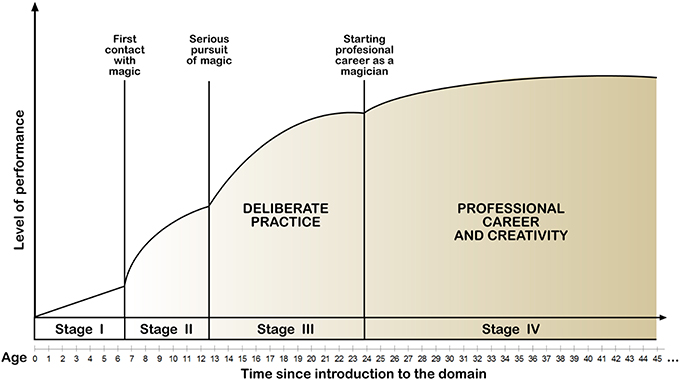
I'm slowly working my way through virtually all of the articles published with Ericcson's name attached to them. It's a relatively lengthy process but it has proved worthwhile in coming to understand the long-term implications of skill acquisition and nearly 10 years or more necessary for expert level performance.


As a purple belt, and as a competitor, and as someone who works two jobs in addition to training, I'm always looking to maximize my training.


I'm also overhauling my training to be more evidence-based.
That is, doing things because evidence suggests they work/are effective, rather than because that's how it has always been done or simply "because" or because no one's bothered to think of doing it differently than how they were taught.

Progress and growth are almost always uncomfortable for the entrenched, for the advantaged, for those that benefit from the system in place.

The unspoken code of how things "ought" to be played or how things "should be" has always been an area of resistance for me. I never knew quite what it was, but the combination of personality traits of being "open" to outside or unconventional ideas and the trait of being "disagreeable" that is uncaring for the social approval of others is where it likely stems from.

At any rate, information is all well and good but ultimately worthless if not implemented with action.


The takeaways: internal motivation, access to expert feedback, guided/explicit instruction, and persistence/perserverance all prove necessary to achieve expert level performance. Aside from all the hype surrounding 10 years/10,000 hour rule, you're left with some sobering realities about structuring your practice/training time.
Showing up and simply rolling likely results in a heightened sensitivity to achieving the state of "flow" which is relatively speaking less effortful performance "in state".

Lackadaisical drilling ultimatley, evidence suggests produces minimal improvement if at all.


White Belt to........
Drilling for motor memory and situational drilling much like running certain plays in practice for other sports, or situational drilling and developing sensititivy to the finer points of various positions or submissions or likely reactions to various submission set-ups or positional escapes would qualify as "deliberate practice".
Practice designed to address strenghts and/or weaknesses which takes into account pre-existing knowledge of the competitor/individual/learner is an essential requirement in maximizing training time.


Beyond that (drilling more and more hours out of the day), the motivation, expert feedback, "repeated exposure to task", varying training methodology to avoid "staleness" or "burn out", addressing of resource and motivation constraints and how you actually divide up your training time (submission, positions, drilling, positional or situational rolling/drilling) and seeking out exposure to feedback beyond training with the same individuals but training elsewhere and also competition as another source of potential feedback all seem to comprise the maximal conventions for accelerating expert performance.
 

Saturday, November 29, 2014

Who I'm watching, What I'm learning, What I'm training....

Been studying a lot of Lucas Lepri and his passing lately. In fact, I've watched every match of his I can find on youtube/the internet. In particular looking at how it's changed from his worst appearance in the finals of the mundials (2007 against Vinicius I think), his repeated matches over several years with JT Torres, and culminating with his matches against Satoshi and JT at this years Mundials. He's become far more insistent in how he passes and his passing game appears relatively narrow (in a good way) with the positions he gets to and the manner in which he breaks down the open guards of those he faces.


I've been working on my mentality toward competing by watching a lot of Malcolm Gladwell and reading research regarding expert/skill acquisition.


Ericcson in addition elaborates on the tenants of what that 10,000 hours actually means: notably things like desire, time spent honing your craft consistently, and deliberate practice (along with expert feedback/mentorship).

The takeaways (among others) are that mindlessly training hard is not the best use of training time. Forming a systematic approach to training and being open to feedback and match analysis, however, are ways to optimize training. Training one way, or just grinding in the same drills are also not the most effective use of your training time.

I've been going back and rewatching matches for my entire year at purple belt. Looking not only for mistakes but also where I've been effective: namely with a few exceptions my open guard sweeps have been considerably more consistent than my open guard passing. Where I've gotten caught and/or where I've lost matches has begun with being swept while passing with only about 3-4 matches where I was not able to get the sweep. In the matches where I couldn't get the sweep, I didn't chain together my open guard sweeps and various types of open guard, ala DLR, Reverse DLR, deep half, spider, et cetera.

I made some hard choices and quit my weekend job to be most rested for my referee and competition opportunities and also not mix up my sleep schedule by working downtown weekends then back to my full-time job during the week.
I've begun drilling 3-4 days a week in the morning for about 90 minutes in addition to training at night and on the weekends.

Phsycially, I've been drilling my guard passing and combining my knee through guard passing with a backstep pass and some other nuances to my guard passing. I've been logging anywhere from 60-80-100 reps at a time in sets of 20.