Thursday, July 12, 2012

Interview Thursday: Lloyd Irvin & Jimmy Harbison


Decried. Respected. Doubted. Detracted. Called a Con man. An internet marketer. What have you, whatever.
The verdict may be out on Lloyd Ivin's character, but anyone who takes a guy you've never heard of (Keenan Cornelius) and coaches him through a system whereby he wins weight and absolute at the Euro, Pans, Worlds, Brasileiros (and weight at the World Pro) is a man that you should listen to as to how his mind works.And, as Lloyd reminds the audience in the interview, Harbison did a similar feat in the brown belt in 2011.

Internet marketing or not, there is truth and insight to be gained. 

Above all, Lloyd comments on not making fucking excuses.
Many of us are recreational players.
But some of us, those that are on the cusp of training semi-professionally could benefit from some of Lloyd's no nonsense talk.

If you train 2-3 days a week, the above is not for you. If vacation means getting drunk all day and chasing pussy wherever you are, then the above is not for you. However, if you are like me, and you fill your vacations training 2x a day, and plan trips around places you can train. If your vacation is built around a major tournament, then you should watch the above. It may give you the motivation to truly begin setting your lifestyle around grappling and competition or just being the fucking best that you can fucking be. This isn't for everyone. But, the approach to training, the deliberate training, the focus on weaknesses and aspects of your game requiring improvement, can help everyone who steps foot on the mat.

Notes on the President's Cup/The Ills of American Judo


Found this over at Judoforum.com:

"June 11, 2012

President’s Cup Notes

It has been many a year since I have been around “the judo scene” in the USA. Since retiring from competition in 2004 I have gone to watch the 2008 Olympic Trials in Las Vegas and the Golden State Championships once. Yes, like anybody else who still “knows a few people” I have heard the positives and negatives about USA Judo and I have never been a cheering section fan of the USJA or USJF per se either. What I am is a Judo guy, a family man. If I show up to a local judo club I feel like it is my duty to give back to people, help people figure things out; “coach a kid up,” help teenagers find their way to college via Judo like I did, talk to parents, watch what is going on and see if there is something my particular set of skills might help with. I am somebody with a real life limited financial budget and no desire to spend time away from my wife and kids if the experience is going to be mediocre.
This past weekend I was able to watch quite a few decent matches at the President’s cup. I saw an interesting 60kg division work itself out, two decent 66kg players who are familiar with one another have a solid match and then a highlight reel walk-through the rest of the round robin, a 90kg final that was a US Nationals repeat and worth the price of admission, a near stunner at -100kg as a local kid (who in all honesty needs to train much harder) nearly defeated the tried and tested Japanese giant, and an 81kg division that had some legitimate talent on display across the board.
In other words, while the divisions were embarrassingly small there was some real quality to be found and some excitement. So, now we get to the real heart of the matter. The problem and the solutions.
Problem. This was the fourth straight month with a major USA Judo event. March was host to the National Collegiate Judo Association Championships and the USA Judo Scholastic Championships. April featured the USA Judo Senior, Masters and Kata National Championships. The US Open and Miami World Cup were held in May. And, now in April we had the President’s Cup. In July there will be the Junior Olympics as well. Not to mention, there were multiple E-level events such as the Pedro, Morris, Liberty Bell and Midwest championships.
In other words, nobody with an actual job and the need to put food on the table or a roof over their heads could have possibly attended all of these events. No matter the reasons, this is just simply horrific planning and something that should be seen as completely unacceptable within the US Judo world. To think that the collective event planning minds within USA Judo saw this schedule and actually believed that this stood a chance to work is utterly shocking. And that is without consideration of the current economy.
So, what is coming up in September? October? November? December? January? February? That is right, there pretty much cannot be anything. USA Judo will vanish for the next six months and then come back around to possibly irritate people all over again if this is not solved. So, I guess I need to provide a solution.
1. Fire the people who thought this was a good idea in the first place. If somebody in the private sector arranged major events in a manner like this, events that needed a national audience of moderate income families to attend and finance, then they would be out on their rear and so too should the brainpans who suggested this for USA Judo. Any business needs to be in touch with their consumers and this type of event planning shows that that is clearly not the case.

2. Space the events out. There are four major events and twelve months in a calendar. I think this is pretty doable math. Let us begin with April, since everybody within the US Judo community knows that April equals the nationals. May, June, July should host the next event. August, September, October can be host to the next event. November, December, January can host the final event of the cycle. Imagine if everybody, in every club across the USA could know when these events were coming, look forward to them, save money to attend them and actually go! AMAZING!

3. Combine the junior and senior events at least twice a year. Yes, there are events the parents want to have all to themselves to see their “judo buddies of old” and there are events that should be all about kids too. One senior only event, one junior only event and then two combined events would allow the spacing of events to work and it would allow families to afford the sport of Judo once again. The US Nationals remains for seniors only. The Junior Olympics remains for kids only. That leaves the international events, scholastic event and the President’s Cup to be combined. But, to be honest, we can do away with something and figure this all out. Combining the US Open, Miami World Cup and Jr. International is common sense. Have a weekend where kids and families can come to watch the best in the world and where we can showcase what our kids can do. This leaves the President’s Cup and scholastics. Which, honestly, are perfect to combine. So what if the same people may compete in against each other twice in a weekend. Let the college and HS kids fight it out and then let them all fight it out against any grown adults who want a chance at the young whipper-snappers. Oh, and, the scholastics should always be held on the campus of an NCJA campus whenever possible. If you are out to grow Judo, then host the events in a place that will make the High School kids actually want to do Judo when they are 19, 20, 21 plus years old… Show them that places like Texas A&M, Tennessee, West Point, SJSU, etc. all have Judo teams for them to consider.

4. Go back to the old way of running tournaments. The real issue of why attendance numbers have gone so far down at USA Judo events, and why USA Judo is raising entry fees and why they are trying to have so many events is because nobody is going to them. But, why is nobody going? Why did a C-rated USA Judo event in the Southern California area have less attendance than a local Judo tournament held last weekend? Less than half of what the CA state championships had in Fresno a few weeks ago? Oh, that’s simple, in the eyes of people outside of Colorado and Miami, USA Judo has become a society of snobbish prudes. They have become the awful “Big Government” that nobody wants to be around or deal with or help. There are several reasons for this, so I will explain just a few here.
A) They did away with the reciprocal memberships. When people could join the USJA or USJF and then only need to spend a few dollars more to join USA Judo people were happy to join. Now they have to pay $50 bucks or a family membership just to go to a few events once in awhile? Why bother?
B) They did away with local control. Somehow, somewhere along the line USA Judo decided they “knew best” in Colorado Springs and Miami. Now, I don’t know about you guys, but I never went to Colorado Springs for anything other than the US Open or a training camp back in the days. I don’t know anybody there who knows how to organize a national tournament better than the local communities who get together all of the time to help one another out. I don’t know anybody at the OTC or national office who can put on a better event than the San Jose Buddhist Memorial or Midwest Championships or Liberty Bell. So, why is it that USA Judo over the past few years has decided to destroy something that was never broken in the first place? Was it to create jobs for people in Colorado? Was it to supposedly have some control? Over what? And, whatever the reasons are, it has absolutely failed over the last eight years so it is time to scrap the system and go back to the days of having state organizations bid for the events and then split the profits with USA Judo. At least then the local communities would actually want to show up and support the tournaments—at the very least. And, hotel discounts might actually be discounts, not higher rates paid to hotel chains so that officials from USA Judo can get their suites for free.
C) Get rid of the USA Judo Tournament Organizing Committee. Do you really think having somebody sent by USA Judo to collect $12 at the door was a good idea? Do you really think that the way events are being run now is better than what they were before? I’ve been attending these events since I was ten years old. And, from what I’ve seen, the old “Ladder Tournament” which was run by a local judo organization on behalf of USA Judo would have put this “President’s Cup” to shame. It is gross and disgusting and should not be tolerated.

5. Make the USA Senior National Championships a Domestic A-level event. Make it the most important event, period. So incredibly important that anybody, no matter who it is or what international medal they have won, who does not attend and make it to the podium is not allowed to represent the USA at A-level events internationally for the entire year. If you want to have an injury clause for it, then you say the player who misses the podium at the Nationals cannot compete internationally until s/he makes the podium at one of the other events such as the President’s Cup or US Open. In other words, the person cannot compete at the Miami World Cup, or any other Olympic qualifying event, if they do not make the podium at the US Nationals. It is completely unfair to the event organizers and to USA Judo to have their very best players just decide to skip out and say “the rest of you are not good enough for me to be on the tatami with.” The winner of the Nationals gets first bid on A-events and full funding to Paris, Germany, Moscow, or Kano—whichever event is selected for the entire USA National Team to attend.


So, there you have it. My take on the President’s Cup… An event that could have been so wonderful, should have been awesome, had all the potential to be a truly great thing… and, USA Judo screwed it up, again, and instead lost thousands of dollars to host a major national event that was smaller than a local NANKA tournament."
Wednesday, July 11, 2012

Wednesday's Grab Bag: Who are Gunnar Nelson and Hector Lombard? And Megaton Knows Kouchi Gari

No, seriously guys. The purple lipstick matches my tie.
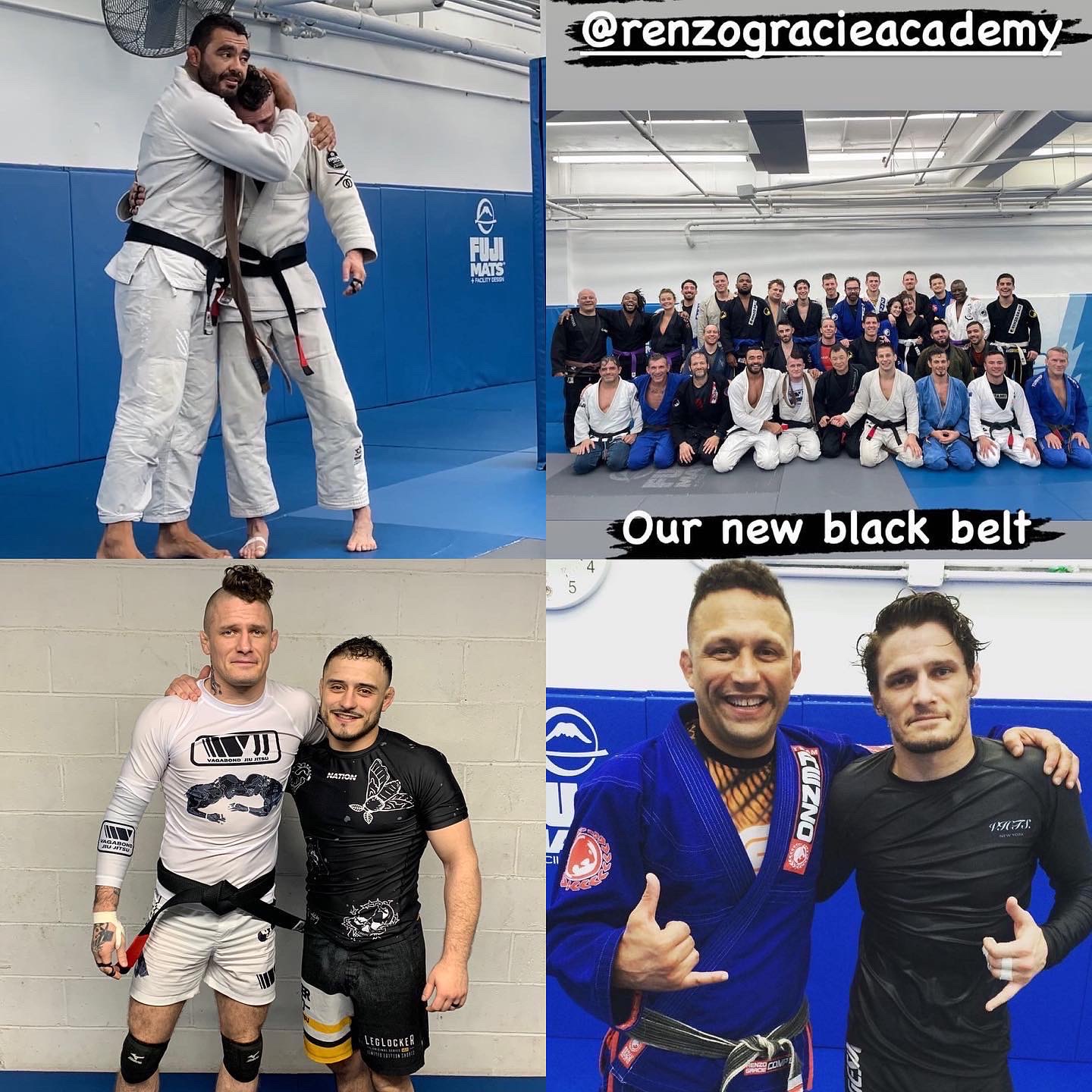
Gunnar Nelson to the UFC. Renzo's black belt who earned his faixa preta in 4 years (?). He's got a perfect record thus far, so here's to hoping we see some more top flight grappling in MMA (*ahem* Roger Gracie....)
   - an extra treat: The Icelandic Guillotine. Is is the grappling equivalent of the Troll Hunter? Is it as rare as a unicorn? Or is it just a folk tale to scare children. Click and find out.


For those unfamiliar with Shango, here is the UFC's newest most hyped MMA import: Judo Olympian, Hector Lombard:


And here is Shango doing some Judo from quite awhile ago:


To mix it up, here's the one and only Megaton teaching a nice kouchi gari from the feet to get the two points in BJJ competition without exposing your back:

Tuesday, July 10, 2012

Tuesday's MultiMedia Mailbag: Judo, Brazlian Jiu-Jitsu, & MMA


Today I bring you a smattering of the various media that's been bouncing around in my brain over the course of the week:

1) A gripfighting sequence b/c gripfighting on the feet is woefully misunderstood by most BJJ players. Just as wrestlers hand fight, with a Gi, you must grip fight. Shocking, I know.


2) The gripfighting sequence sets up a drop knee Ouchi Gari (also taught by Jimmy Pedro) that I like for BJJ as it doesn't expose the back:


The arm across the opponent's body (from the first clip) sets up a 2 on 1 grip, or a Russian (for the wrestlers out there, then you hit the drop knee Ouchi gari/inside trip).
Some of you will say that you don't want to get caught up in the guard. I've found that in competition if I start my step over the leg in the transition to the mat, I get to half-guard, get my 2 points, and then work to pass.

2) The Inside BJJ podcast feat. Lloyd Irvin (he discusses his side of the DJ Jackson faux countdown I posted about here), Andre Galvao on being DQ'd, et al.

3) A preview from over at Sherdog for the UFC on Fuel TV (I know, I don't have the channel either) for tomorrow night feat. a possible 185/middleweight contender bout between Munoz and Weidman.
My quick picks are Munoz b/c he's too much too soon for Weidman. Simpson by better wrestling. Vaughan Lee b/c Dillashaw is is own biggest fan. Carmont by late stoppage IF he weathers the Vemola maelstrom. Te Huna by violent TKO (I think he'll strike while the iron is hot and Beltran recently got the same from Lavar Johnson). Dos Anjos via better wrestling than Njokuani. Assuncao b/c he is a beast. And, Damacio Page by vicious TKO in the first or second round.

Monday, July 9, 2012

ACL Reconstruction: The 2 Most Important Articles I read Pre-Op

Autograft or Allograft...Apparently, that is the question


This article cites several studies comparing auto/allograft as replacement method for the ACL.
The bonus is it compares those who had their own tissue versus someone else's tissue as the basis for the reconstruction.
Allograft is the use of tissue from someone who is not your genetic identical match.
Autograft is the use of your own tissue for the procedure.
It also follows up at 1 and 2 year intervals for patients who are enrolled in military academies and likely participatory in a variety of high-stress, weight-bearing, pivoting athletic endeavors.
For those of us who are serious, competitive athletes, these are the types of studies that should interest us in selecting an ACL reconstruction method.
Most interestingly for consideration, the difference between your own tissue and someone else's:
"On the other hand, the failure rates were significantly different between autografts and allografts. Cadets who had an ACL reconstruction using an allograft prior to entering the USMA were 6.7 times more likely to suffer a recurrent ACL injury compared to those who had an autograft procedure. Even more remarkable were the one- and two-year findings.
Patellar tendon graft
The patellar tendon autograft (orange arrow) serves as the new ACL in this ACL reconstruction.
One year after entering the USMA, 33% of the cadets who had an allograft ACL before entering had experienced subsequent graft failure, compared with only 2% of those who had an autograft. At the 2-year follow-up point, more than half of those who entered the USMA with an allograft had experienced graft failure compared with only 6% of those who entered with an autograft."
AND

This article outlines the various methods for ACL reconstruction and the benefits/costs and risks associated with each. It is a good outline of the history of various ACL reconstruction.


The Map of BJJ Belts and the Journey Across Judo belts

No, this isn't it. But the journey of Alexander the Great across the known world proves apropos

Found a great article that attempts to map the journey across the belts in Brazilian Jiu-Jitsu. Give it a read.
For those who haven't noticed, I enjoy looking across both details for certain specifics but general outlines and perspectives about the path in Jiu-Jitsu in a much lager, macro rather than micro type of view.
Give it a read.

Judo and Jiu-Jitsu have their crossovers, but I'll go over what I now see as various stages in Judo development based on the belts I went through across 3 clubs of which I was a member/part:

White - You show up to class. You buy a Gi. You think you want to play Judo. You will probably quit as most players do before Brown and Black. But you are interested and you begin to show up and are exposed to the basics of falling, of introductory throws, of the very, very basic body mechanics which will carry you through to black belt. You will probably not throw nor submit anyone against their will at this stage. You have no idea the amount of patience, perseverance, and damage your body will take across Judo if you are a steadfast club player and/or competitor. But, welcome to the club.

Orange -You have shown dedication enough to come for a few months. You are attempting things that incorporate the basic body mechanics. It is unlikely you are throwing anyone with timing, precision, finesse, and control.

Green - You are becoming more aware of how your body works. You begin asking questions about the finer details of mat work or a particular throw. You are likely watching specific players on the internet. Looking for players who have a similar style to your own. You have the Judo bug. I would liken this to the new or fresh blue belt in Brazilian Jiu-Jitsu. Many at this stage will still quit before the next belt, but for a time at least, Judo will consume much of your free time and waking hours on the internet.

Brown Belt - for those unaware, the brown belt is divided across 3 stages in Judo. Many tournaments divide below brown and brown and up in separating novice from elite level players. Often, in the below brown belt divisions, arm bars are not allowed, but this varies by state and tournament.
Brown belt often means you are now officially part of the upper belts at tournaments. This also means that the armbars will come at you faster and the game in general takes on a much higher level of risk.

My coach who gave me my black belt described the Brown belt as the belt of being selfishness and no mercy. That is, this is the belt where you hone your tournament game and your handful of specialty techniques. I do not abuse less skilled players, but my focus each and every practice is to better my repertoire of throws, transitions, mat work et cetera.My job even when working with new or inexperienced, or lighter players, is to occasionally land my specific throw with as little energy as possible and use as much finesse as possible to land it. I should begin to really delve into one or two specific throws and various set-ups, or steps, or footwork patterns to land my throw against various styles of player, various gripping counters, grip breaks, et cetera.
You are also an enforcer and a hunter. Your job in many ways is to look at every single possible set-up, variation, version, different whatever way of doing your handful of chosen, tokui waza's or "pet techniques", that is your set of specialty moves. The moves you have honed across different tournaments, players, body types, aggression levels et cetera.
When someone comes from outside, you pit your game against their and trust in what you have learned. You are looking for the holes in your game and for new ways to counter what it is that YOU do best.
Should a larger, or a new player come to the club and step out of line or abuse the inexperienced, you are likely trusted (one player in a club) to enforce the rules and expectations of the club. Perhaps, it only takes a nod from your coach. Perhaps it is a stated or rather an unstated obligation. But, it was my role as I became a 2nd or 3rd Brown belt and it is a learning experience unlike any other.
The Brown belts (as in Brazilian Jiu-Jitsu) in my experience are some of the most fun to watch. They open up their games. THEY WANT THEIR BLACK BELT. They wage war with other brown belts and while they may lack or intentionally forgo playing a tighter game or a safer game, they are in terms of technical skill  comparable to those at their rank and above.

1 degree - Brown belts begin adopting a more aggressive game. They are building the belief in their techniques that makes them more dangerous than before. They are ready to no longer play with the lower belts at tournaments. They will now likely begin competing only in the elite divisions/upper belt divisions, and will have to move up in weight with the upper belts should they want to do a second divisions at a regional level tournament. You will still likely depend on more physical exertion than necessary to win or to score with throws, but your aggression and likely physical conditioning will carry you through tough randori (free rolling/sparring) sessions.

2 degree- The Brown belt is finding success as a brown belt. Their competition record shows they not only can hang with other brown and black belts, but they are trusting in their chosen techniques and finding success with them against equally and/or higher skilled players in tournaments.

3rd degree -The 3rd level of brown belt is again finding more and more success against equally ranked and/or higher ranked belts. The 3rd level of brown belt has continued refinement of his game across the lower brown belts and now is almost ready if not already prepared to wear a black belt. A brown belt has come to understand the variations in a tournament setting between time remaining and aggression, how to use the points and the interplay between being ahead or behind when winning matches. Knowing that the player who is behind on points must open up his game and will be more vulnerable as time winds down for example. Or, perhaps, using mat work to run down the clock against a dangerous thrower over which you hold a lead in points. The Brown belt at this stage is showing the flashes of brilliance and not thinking but finding "the zone" in which his/her style of Judo manifests itself in a largely unconscious manner.

Black - teaching and coaching and being trusted to mentor other lower belts is now my responsibility. I am a part of imparting both perspective, opinion, belief, and enforcing the expectations of the the club/team over lower belts. I am trusted to not only teach, but to coach, referee, and shape the games and attitudes of younger, less experienced players. I compare notes with other black belts and absorb what I can from my fellow black belts to shore up my knowledge base and be able to teach the beginnings, or the basic, classical version (and some competitive versions) of the Gokyo (catalogue of throws). My knowledge of other players, famous and local, as well as my ability to discern what works and what doesn't (and why) is why I am trusted as a black belt.

- Let me qualify the above: this was my experience in 3 different clubs of which I was a part of Judo from white to black belt. In Japan and other places, the black belt really only signifies that you can defend yourself on the mat and that the referee is no longer there to protect you in many ways. You are one of the big boys (if even that) and your knowledge of the basics in gripping, transitions, throws, body mechanics are relatively sound, and NOW your pursuit of knowledge in Judo may truly begin.


I will probably come back and redact/amend/edit/update/modify some of this information in the coming year, but as for now, I think this suffices for some of the beliefs about the belts in my personal experiences at various clubs and in talking with the black belts who mentored me on my path to Black Belt.

Saturday, July 7, 2012

ACL Reconstruction: Days 2-3


Some background:
For pain, I was prescribed hydrocodone.
For nausea (from the pain medication) I was prescribed another drug.
And for anti-inflammation I was prescribed Ketorolac.

I can take the hydrocodone every 4 hours.
The anti-inflammation I take every 6 hours.

The first day, to avoid waking up in a maelstrom of pain, I took 2 hydrocodone every 4 hours.
By day 2, I noticed I would get a headache if I didn't take the hydrocodone every 4 hours, telling me my brain was getting used to it. I have a serious fear of painkiller addiction, and so I started trying to go about 5-6 hours and only taking one hydrocodone.
By today, day 3, I've gone the whole day and only taken 1 hydrocodone, as getting up to take a shower proved uncomfortable as it was also the day I finally unwrapped the stretch bandages and gauze from around the knee. I didn't feel outright pain, or anything excruciating, but the sensations of the leg breathing again, the water from the shower (perhaps too warm), and standing up for an extended period of time and having to slightly hop a bit without crutches to shower I think proved a bit overwhelming for my knee (or I'm just a pussy).

At any rate, I've been trying to do the isometric exercises suggested by my surgeon and get on my crutches to wheel around my apartment and the building for the days 2 and 3. Once the nerve block wore off, the surgeon recommended I use the crutches to place weight on the injured recovering leg and start using the muscles again.

By and large, what I've been told is true: back even in 2005, ACL surgery could be an absolute nightmare in the recovery, but *knock on wood* my early recovery has been relatively pain/discomfort free. I credit this to a great surgeon b/c my knee was not very swollen even after surgery and then again after removing the compression/wrap that went from my ankle to mid-thigh level.