Saturday, July 12, 2014

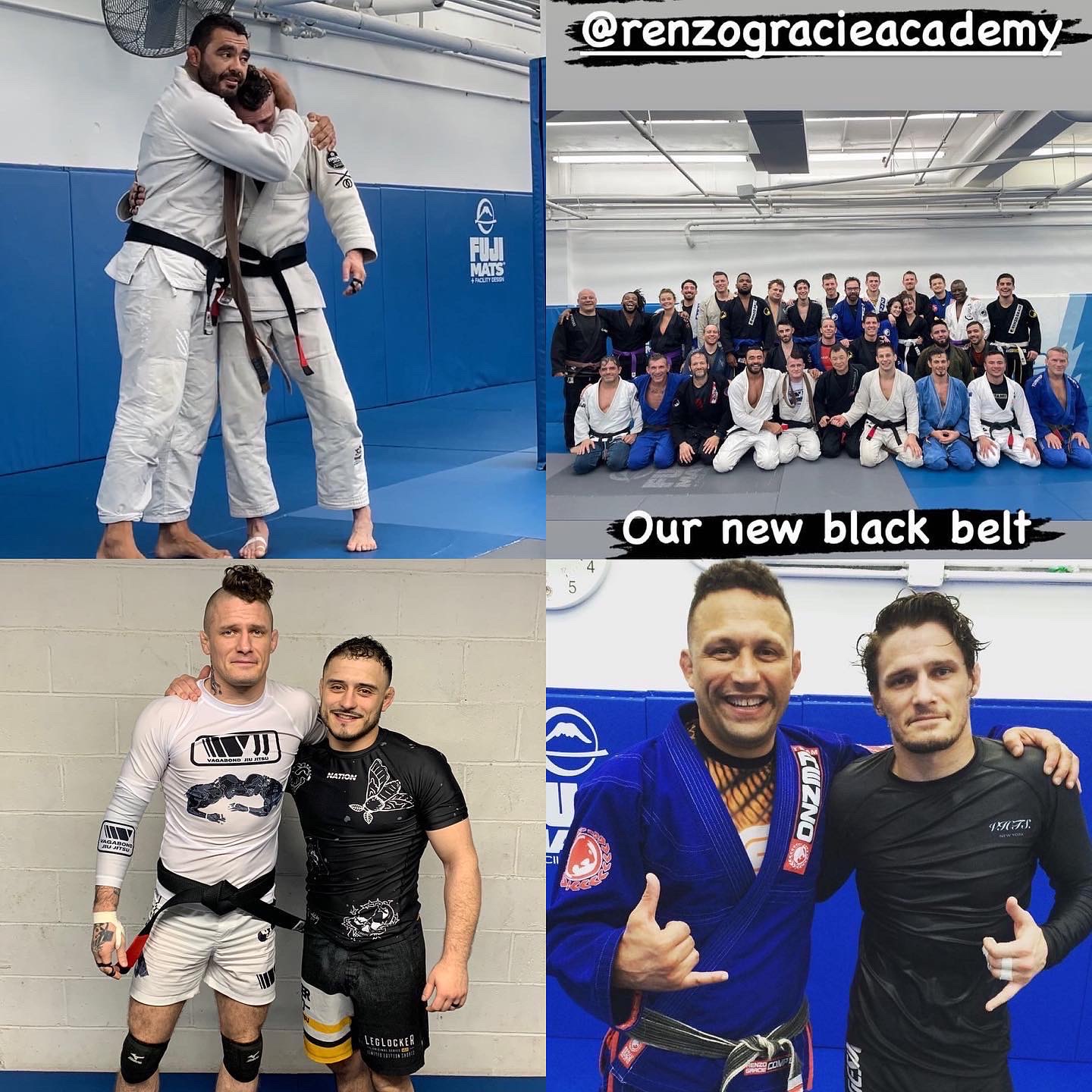
Hey, I Know This Guy - Andrew Smith on Inside BJJ Podcast


Andrew Smith on the Inside BJJ Podcast - click HERE
Also click HERE for a brief bio of the man himself

I first got to know Andrew through his tournament/company US Grappling.
US Grappling runs professional, fun, on time (!) grappling tournaments here on the East Coast.
He's an all around great guy with great students and one of the nicest guys I've met in BJJ since I began grappling.
He has a cerebral approach to life, to learning and to just about anything you would ask him about. Listen and learn folks.

Friday, July 11, 2014

Metamoris 4 Countdown Video: Dean Lister vs Josh Barnett


Well, we never got the Toquinho/Lister Leg Lock Bonanza we were promised, but this is a good runner-up despite any size difference notwithstanding.


The Leg Lock Apocaplypse that never came to fruition.....ACL's everywhere rejoice!
I  was an avid, vitriolic, and vociferous hater par excellence of the first two editions of the Metamoris.
But, I am not above admitting my change of heart because the last event was a great one (minus some weird named hip-hop dude announcing fights), and I am genuinely excited for this next card except that it has only one Gi match from what I've read thus far (plus a secret match! Ooooh!)

Gimmicks notwithstanding, bring on the hype train!

Abraham Marte & BJJ Hacks TV: Size Does Matter in Brazilian Jiu-Jitsu

I've actually had the pleasure of seeing this guy compete at some high level events. He is an imposing statue that's for sure but as you'll see in the interview portion, a really nice guy.
Yay! once again for BJJ Hacks TV for highlighting a personality in our diverse sport.

Thursday, July 10, 2014

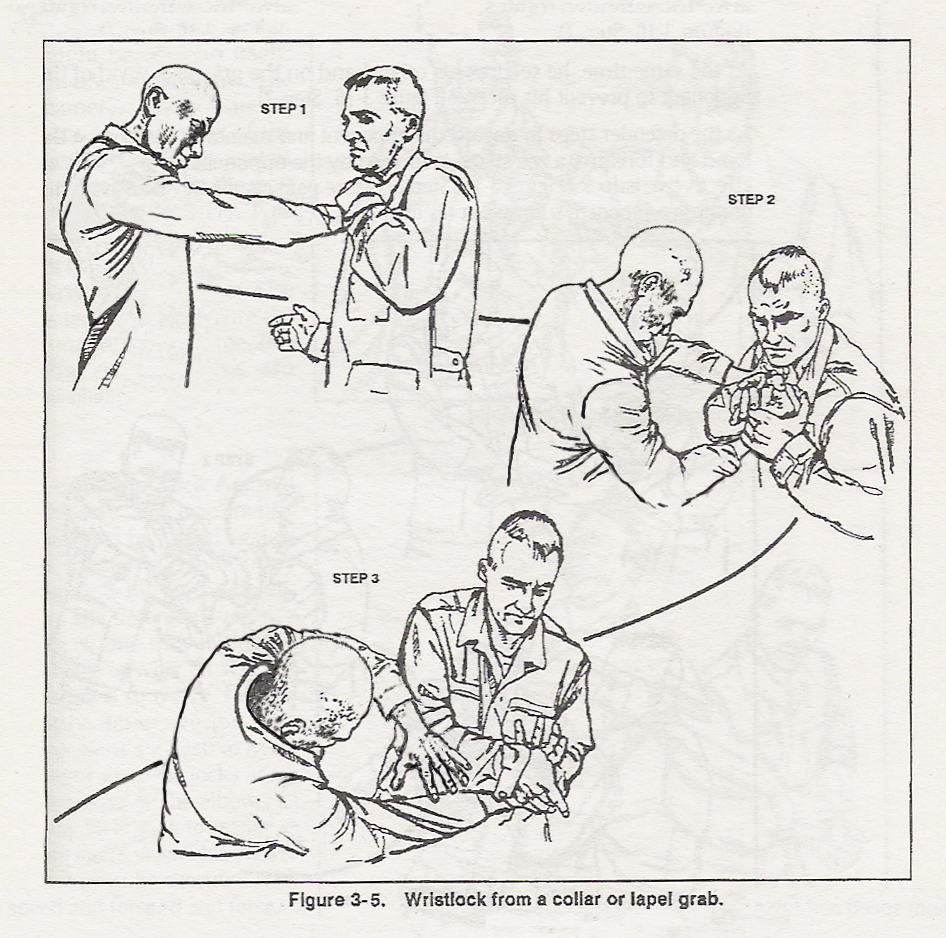
Wristlock(s) Of Doom with Fredson Paixao & BJJ Hacks TV


We call them a "dandy" at my gym.
The phrase can be used as a noun or as a verb.
Example: "He just got dandied!" in the event someone just tapped due to wristlock.
Example: " Man, that dandy really hurt my wrist" in the event your tough guy Jiu-Jitsu wrist joint is left smarting from the "mao de vaca" translating roughly as the "hand of the cow."

For those of you new to Jiu-Jitsu or behind on your history, Fredson Paixao is an expert at wristlocks (along with being a BJJ World Champion among other notable credits on his resume).

"
- 3x World Jiu Jitsu Champion (2001, 2002, 2005);
- 8x Brazilian Jiu Jitsu National Champion (1997, 1998 and 1999 as purple belt, 2000, 2001, 2002, 2003, 2004 as black belt);
- Fredson is also in that rare category of belt jumpers because "Master Osvaldo had other plans as he decided to promote the prodigy to black belt straight from purple belt by the end of 1999."
Aside from a mixed martial arts career, Fredson will forever be tied to his extensive knowledge of wristlocks. Enjoy.


So add the Oscar Wilde of the submission game to your arsenal and join the underground group called the flopping dandies.

Monday, July 7, 2014

Best of BJJ in 2014 Thus Far - BJJRants.com & my own year in review thus far

BJJ Rants did it HERE. Go support them.

It's been an interesting and fun 2014 with having the Worlds, Pro Trials, and Pan Ams all in before the summer even hits.
We're lucky to have some other mid-level-ish events popping up with the likes of Dream, KO Finisher, and others and it's hard to complain with the internet and streaming and events viewable for something like $10 or 15, or at the outside Metamoris for 30-something if I recall correctly.

It's a great time to be a grappling fan, though, seriously, the competition season could be better spread out rather than having the Pans, Pro Trials, and Worlds all slated in the spring.
We're in a gap year for the ADCC, so that's looming out there, but Metamoris should give us some thrills coming up around the first week in August no matter how long the stretch from IBJJF events in the fall may barely get us by until the spring of 2015 (the Pro League is in October, don't forget!)

I opened the year taking 2nd in the -66kg black belt division at Mayfield's Open in North Carolina.
After having been promoted in December to purple belt/faixa roxa, I competed for the first time at purple belt in a submission only tournament in Greensboro, taking 2nd place to my teammate. Competed in my first points tournament at purple belt in Virginia Beach, and took 3rd after 2 weeks not training due to illness. Recently competed at US Grappling in Richmond and took 2nd at featherweight purple belt, closing it out with my teammate.

2014 very, very likely marks the last time I will compete in Judo under the new rules.

I've been enjoying fighting for the takedown in Jiu-Jitsu, because it's freestyle, no gripping restrictions, no banning of leg grabs or banning of locking the hands around the waist, and it's just a far less restrictive style of play on the feet. My ACL reconstruction took me out of competition as the new rules about DQ'ing for even an obviously inadvertent leg touch results in automatic DQ and the return to competition was a stark contrast to the style of Judo I left before blowing out my knee/tearing my ACL. It's sad/hard to reconcile in my mind that in order to find what feels like Judo on the feet, I have to compete in sport Jiu-Jitsu, but this is the life under the regime of the IJF, IOC, and the all mighty demands of TV viewership friendly styles of play for the Olympics.
The day will come soon when Judo players can't defend a single or double leg to save their lives, and the sport has very little to do on the feet with something resembling a method of self-defense. On the flipside, due to the advent of MMA, the IOC and IJF now finally encourage more mat work and submissions and the like. Irony, oh irony.

There are some big changes coming to my work, living location, and personal life coming in the next few weeks and as they become finalized I will announce them here. I started this blog back in mid 2008, and here we are, 6 years later. I had my last MMA fight in 2011, tore my ACL shortly thereafter, had my knee reconstructed, returned to Judo and Jiu-Jitsu slowly but surely, was promoted to black belt in Judo and purple belt in Jiu-Jitsu:  all during those 6 years.
Thanks for all the support, readership and your time.
I'm wary but excited to see what this upcoming year brings as I face new challenges both on the mats and off. Regardless of what that brings, I'll continue blogging.
 

Wednesday, July 2, 2014

Inside the Mind of Bernardo Faria

I've made mention of him on here before as a big influence on my deep half guard game, Bernardo Faria. He's a 3x world champion and has given very tough matches to the two other best big guys in the game for the last few years: Rodolfo Vieira and Buchecha.
So, despite being a heavyweight, I pay attention to his game.
It's basic but basic to me is not a bad thing. It's solid, able to be recreated and the ability of his to impose this game repeatedly, in my mind, shows the strength of those positions and sweeps, rather than emphasizes his power as a heavyweight.

That being said, the full interview is HERE at Graciemag:

I'm always interested when I hear high level competitors discuss when or for how long they've been working with a position as a cornerstone of their game.
Faria talks about his blue belt half-guard game and his back attacks polished by Marcelo Garcia up in NYC.

"
Since I moved to NY (Marcelo’s school), my half guard hasn’t changed so much. I probably just adjusted it even more, because Marcelo’s way to pass the guard is very good against half guard, so training with him and all his students definitely helps to improve my half guard. But one thing that I improved a lot since I moved to NY, was my back attack. Marcelo taught me how to submit from the back, and I’ve already seen big results in tournaments.
During just the Worlds alone I got four submissions and two were from the back."


"But in my case, 90% of my sweeps are from half guard; I’m not a wrestler nor judo player. Rodolfo will never pull guard against me, so I have to do half guard, and one thing that I learned in BJJ that I even use in my general life, is that we have to trust in ourselves It doesn’t matter who we are, what we do, if you have something that you do well, you have to believe and trust that it is going to work against everyone."
"For example now I started doing wrestling to see if I can finish my single leg from half guard better."

Tuesday, July 1, 2014

Thoughts on Outliers, Skill Acquisition, and Expertise


Probably due to my full time job, I spend some of my spare time studying the science of skill acquisition and just how exactly you can become good at something: be it chess, singing, art, bridge building, Jiu-Jitsu whatever.

Kit Dale says don't drill.
Other world champions swear by drilling.
Marcelo says he does more Jiu-Jitsu for his conditioning.
Other world champions swear by strength & conditioning for their success.

Beyond all these, is the basic question: what do you need to do to become truly great at something?

If you've read Malcolm Gladwell's Outliers, he posits the 10,000 hour rule, an idea which has actually been around for  number of decades prior to his pop culture semi/quasi science book for the masses.

The 10,000 hours or 10 year rule toward mastery has become something of a common idea in pop culture. That being said, it is still hard to dispel the human bias toward believing in "the natural".

Gladwell, but more specifically, the work of Anders Eriksson dispels this myth with clear, empirical evidence and has looked at hundreds of experts in their respective fields, and more importantly, he has done research in how to RECREATE the success and gained ability in various skill sets.

To look at an individual will always be marred by potential variable.
To consistently recreate an efficient system of skill acquisition has verifiable merit.

The first piece, is from a Cambridge compendium on the acquisition of skill, something like 1,000 pages.
You can read Anders' contribution here.

"Based on recent advances in the scientific analysis of

reproducibly superior (expert) performance, we know

that superior performance does not automatically

develop from extensive experience, general education,

and domain-related knowledge."


Anders also heavily supports with research the need for what is termed "Deliberate Practice".
That is to say, dedicated practice focused on specific areas of improvement. He goes on to elaborate that most "naturals" often had access to high level, time-available instructors, had desire to learn the given skill set, and on an increasing learning curve continually adapted to the feedback of trial and error. He also emphasizes the support of parents and family as part of this framework.

A companion piece to this can be found HERE.

It's an important paradigm shift, because two often we attribute success to some ethereal, invisible quality which by its definition we rationalize that we cannot attain it.

Hard work and sacrifice alone are not the sole ingredients. Dedicated and deliberate practice, which skilled coaching, and the desire to master the skill set on a long term timeline.
You often hear it when the common or general public looks at the meteoric rise of someone like Keenan Cornelius. People will always look for a way to rationalize or in some back handed compliment kind of way discredit someone's ability to rise faster than their own.

What did Keenan, by his own admission, have?
A supporting family.
Access to high level training.
Rigorous training and constant competition in a highly competitive environment where his job and life was essentially training Jiu-Jitsu.
Keenan also admits readily (like Caio Terra) he was really not that good early on. He emphasizes how little he actually knew and how humble his beginnings were. Hardly the birth story of a natural that others often try to overcoat to rationalize his rise to success in such a comparatively short period of time.